ISO 9001:2015
 ZED Bronze Certified

Step-by-Step Guide to Select Air Compressor Capacity
Compressed air helps many factory machines run every day. It drives tools, supports automation, and helps to maintain production output. Machines may stop or slow down if the air compressor is too small. If it is too big, the factory could waste power and money. Many factories face this issue when they buy compressors without checking the real air demand. A simple and clear selection process can prevent these problems. The right capacity supports steady pressure and smooth operations. This blog covers how factories can determine air needs and choose the right air compressor capacity for reliable operation.
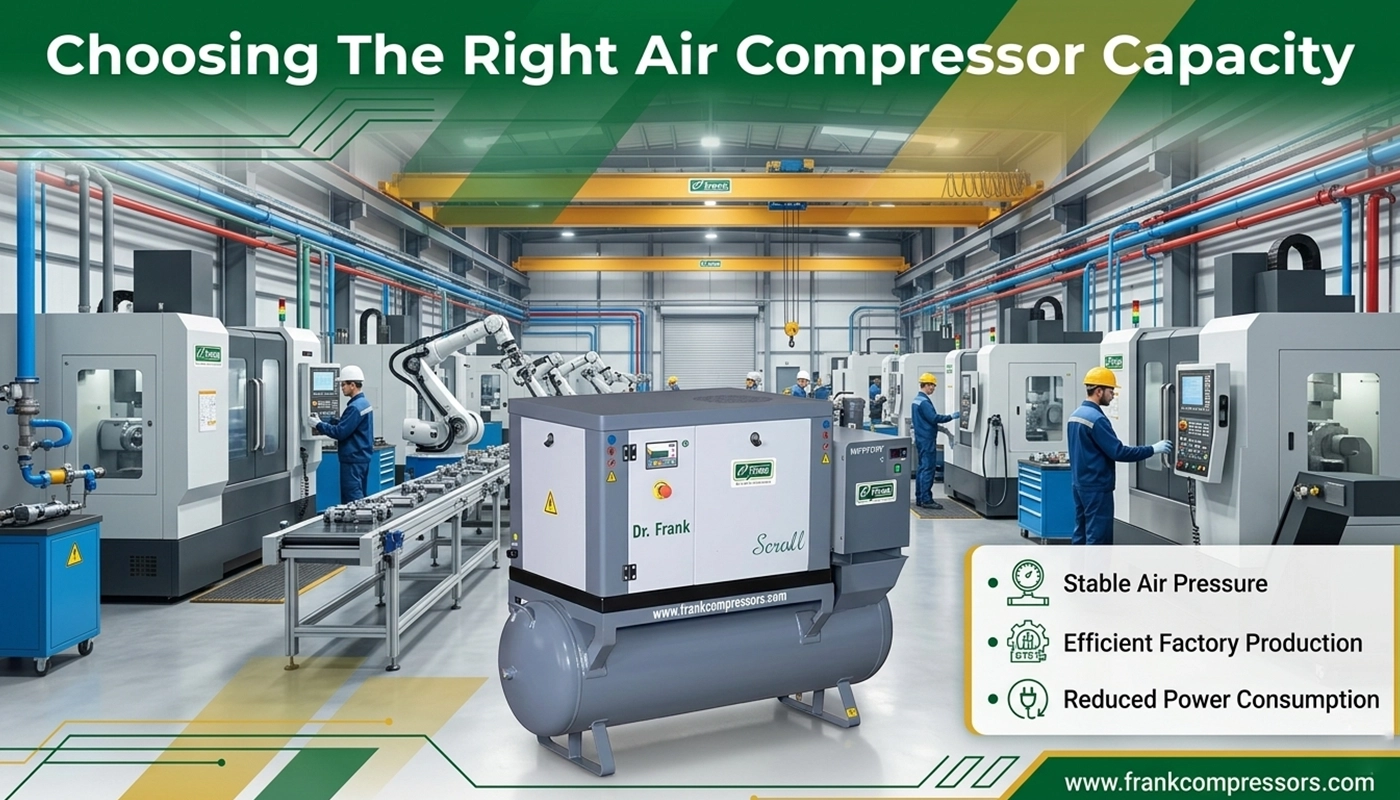
Why Air Compressors Capacity Matters in Manufacturing?
Air compressor capacity shows how much rate an air system can deliver. Factories measure it in CFM, or cubic feet of air per minute. The right capacity helps machines receive stable air pressure while they run.
When the compressor cannot meet demand, machines may lose power. Production may slow down or stop for short periods.
Why the correct capacity matters
- Keeps air pressure steady during work
- Helps machines run at full efficiency
- Reduces sudden pressure drops
- Prevents production delays
- Helps control electricity use
A well-sized compressor supports daily factory work without stress on the system.
Understand the Basics: PSI and CFM
Before choosing a compressor, factories must know two key terms: PSI and CFM. These numbers explain how compressed air works in a system.
| Term | Meaning | Why It Matters |
|---|---|---|
| PSI | Pounds per Square Inch | Shows the air pressure level |
| CFM | Cubic Feet per Minute | Shows how much air flows each minute |
A Simple Way To Understand It:
- PSI shows the force of the air
- CFM shows the volume of air supplied
- Machines need both values to run properly
For example, a spray gun might need 90 PSI and 8 CFM. If the air compressor cannot supply this level, the tools could not run as expected.
Knowing these values helps factories select the right air compressor system.
Step 1: Identify All Air Powered Equipment
The first stage is to list all the machinery that uses compressed air in the factory. Working appropriately for a certain volume of air for every tool. Factories often overlook small tools when they calculate demand. Even small tools add to the total air requirement.
Common air powered equipment
- Pneumatic drills
- Impact wrenches
- Spray painting tools
- CNC pneumatic controls
- Packaging machines
- Air cylinders in automation systems
Check the manufacturer's manual for the CFM requirement of each tool.
It is also wise to include machines that the factory may add later. Planning helps avoid buying a second compressor too soon.
Step 2: Calculate Total Air Consumption
Once the factory lists all equipment, the next step is to add the CFM values together. This gives an estimate of total air demand.
Example calculation
| Equipment | Air Requirement |
|---|---|
| Pneumatic Drill | 5 CFM |
| Spray Gun | 8 CFM |
| Assembly Tools 1 | 10 CFM |
| Packaging Machine | 7 CFM |
Total Demand = 30 CFM
However, the factory should not select a compressor with the same capacity. Air demand may increase during busy periods.
Add a safety margin
- Add about 25 to 30 per cent extra capacity
- Helps manage peak production hours
- Allows room for future machines
This margin helps maintain steady airflow during normal operations.
Step 3: Consider Peak Air Demand
Factories do not always use compressed air at the same rate. Some processes need short bursts of high airflow. These moments create peak demand.
If the compressor cannot handle these peaks, air pressure may drop quickly. Tools may slow down or stop until pressure builds again.
Common causes of peak demand
- Several pneumatic tools running together
- Start-up of production lines
- Cleaning work that uses compressed air
- Shift changes with higher activity
A factory should study when these peaks occur during the day.
Selecting a compressor that supports maximum simultaneous use helps maintain smooth operations.
Step 4: Evaluate Air Distribution Losses
Compressed air does not flow through pipes without loss. Pressure might decrease as friction and leaks allow air to pass through the system.
Factories with long pipelines often see larger pressure losses.
Common sources of air loss
- Long pipe networks across large factory floors
- Pipes that are too narrow
- Old connectors or fittings
- Small air leaks in valves or hoses
Even small leaks can waste a large amount of air over time.
Factories usually add 10 to 15 per cent extra capacity to handle these losses. This helps ensure machines still receive the required air pressure.
Step 5: Choose the Right Air Compressor Type
Air Compressor type also affects how well the system supports factory demand. Different designs suit different levels of use.
| Compressor Type | Suitable Use |
|---|---|
| Reciprocating Compressor | Small workshops or light use |
| Rotary Screw Compressor | Continuous factory production |
| Centrifugal Compressor | Very large industrial plants |
Key factors to consider
- Daily operating hours
- Continuous or intermittent demand
- Required pressure level
- Maintenance support
Many factories choose rotary screw compressors because they provide stable airflow and support continuous operation.
Choosing the right design helps the compressor perform efficiently for many years.
Common Mistakes When Selecting Compressor Capacity
Some factories choose compressors based only on price or brand. This approach can lead to poor system performance later.
Mistakes during selection often cause pressure problems or high energy costs.
Common mistakes factories make
- Ignoring peak demand periods
- Not checking air leaks in the system
- Choosing a compressor that is too small
- Buying oversized compressors that waste power
- Skipping proper air demand calculations
A careful selection process prevents these issues. Factories that measure air demand correctly often see better equipment performance and fewer interruptions in production.
Quick Checklist for Selecting Compressor Capacity
Factories can follow a simple checklist before buying a compressor. This helps confirm that the selected capacity matches real production needs.
Compressor selection checklist
List all air powered equipment
- Check the CFM requirement of each tool
- Add total air demand
- Include a 25 to 30 percent safety margin
- Consider peak demand periods
- Check air distribution losses
- Select the right air compressor type
Using this checklist makes the selection process easier and more accurate.
It also helps factory teams discuss compressor requirements clearly before making a purchase decision.
Choose the Right Air Compressor Size With Frank Compressor
Selecting the right air compressor capacity helps factories maintain stable production. A well-sized compressor supplies steady airflow, supports machines, and avoids pressure drops. Careful planning also helps control power use and maintenance costs. Factories that measure air demand, review peak usage, and check system losses can choose the correct compressor with confidence. As the best industrial air compressor manufacturer in India, Frank Compressor offers reliable air systems that meet factory airflow needs and ensure smooth daily operations without interruption.

Recent Blogs
- How to Select a Rotary Screw Air Compressor for Factories?
- Why Permanent Magnet Motor Screw Compressor Saves Energy?
- Air Compressors in EV Battery Manufacturing: What to Know?
- How Do VFD Screw Compressors Save 35% on Energy Bills?
- How to Identify and Fix Air Leaks in Compressed Air Systems?
- How to Remove Moisture from Compressed Air Effectively?
- Choosing the Right Air Compressor Capacity for Your Factory
- How Energy-Efficient Compressors Cut Industrial Power Costs
- Single vs Two-Stage Reciprocating Air Compressor Overview
- Top 10 Air Compressor Manufacturers in Coimbatore
- Air Compressors for Electronics & Semiconductor Industry
- Understanding Oil-Free Scroll Air Compressors & Advantages
- Oil-Free vs Oil-Injected Compressors for Textile Industry
- Tips to Pick The Best High-Pressure Compressor For Business
- Key Things to Check Before Installing a PET Air Compressor
- Benefits of Dual-Stage and Single-Stage Air Compressors
- How to Silence an Air Compressor for a Peaceful Workspace?
- Expert Tips to Select Screw Air Compressor For Packaging
- Benefits of Oil-Free Air Compressors For Food & Beverage Safety
- The Importance of Refrigeration Air Dryers in Pharma Production
- Why Choose a Permanent Magnetic Energy Saving Compressor
- The Importance of Air Compressors in Laser Cutting Machines
- How Dental Air Compressors Benefit the Medical Sector
- Key Applications and Benefits of Piston Vacuum Pumps in Industry
- Understanding The Role of Air Dryers in Compressed Air System
- Why Choose Rotary Screw Air Compressors: Essential Advantages
- Innovative Design Features of Screw Compressors with VFD
- Which One to Choose: Piston Vacuum Pumps vs Rotary Vane Vacuum Pumps?
- A Step By Step Guide For Air Compressor Installation & Setup
- Tips For Improve Your Compressor Life Span
- Different Types Of Compressors And Their Uses In Industries
- High-Pressure Air Compressors: Uses and Advantages for Industrial Solutions
- How Air Compressors Are Transforming The Textile Industry ?
- Tips For Prolonging Your Air Compressor's Lifespan