ISO 9001:2015
 ZED Bronze Certified

Why Moisture Gets Into Compressed Air and Why It Matters?
Warm air holds moisture from outside all day long. Compressors squeeze this air and raise its temperature even more. When the hot air cools inside pipes, water turns into droplets on metal walls. Compressor intakes pull in surrounding workshop air that often carries high humidity. Water sits in tanks and pipes for days and mixes with oil to form sticky buildup that blocks airflow.
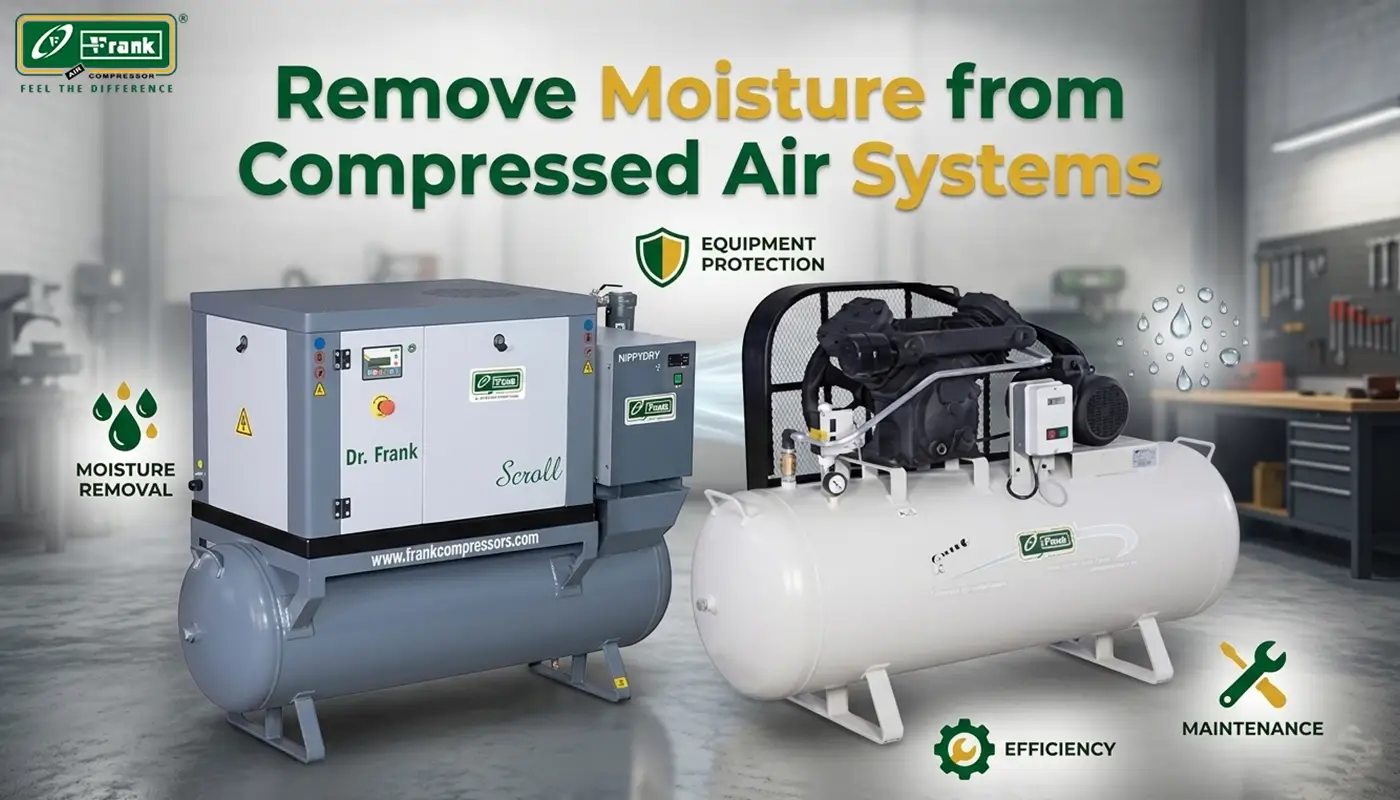
Rust eats away at metal pipes when water stays inside, which causes leaks and fast pressure loss. Paint jobs fail when wet air reaches spray guns. Food packaging grows mold from excess moisture. Tools jam in cold shops when water freezes. Repairs increase as valves stick and fail. Powders spoil when damp air touches them, which leads to rejected batches. Wet lines burst hoses and shut work down, while dry air keeps systems running smoothly. Know how to remove moisture from compressed air to protect your tools, improve efficiency, and keep operations running smoothly.
Proven Methods to Remove Moisture from Compressed Air
Wet air damages tools and products every day in busy shops. Simple solutions dry the air quickly and keep work moving without clogs or rust.
5 Simple Ways to Dry Compressed Air
Drain Water Traps
Install traps under tanks to release collected water every few hours. They remove bulk liquid before it enters pipes and tools.
Coolers Chill Hot Air
Run hot air through finned coils so it cools quickly and forms droplets. Drain pans remove the water each shift.
Cold Dryers Work Steadily
These units cool air to 4°C, where vapor turns into water and drains away. They run continuously for most factory needs with low power use.
Dry Beads Absorb Vapor
Dry beads or balls inside canisters absorb deep moisture for ultra clean air. Heat or replace them when saturated. They suit paint and food applications.
Inline Filters Catch Fine Moisture
Coarse filters stop oil and mist, while fine filters trap remaining water droplets. Check and replace them monthly to maintain airflow.
Coolers work best before cold dryers to reduce heavy moisture loads. Place filters close to tools to catch remaining droplets. Dry bead systems suit cold rooms and food plants where zero moisture matters most.
Match each unit to your airflow rate and pipe length. Check air dryness weekly with test paper that changes color when wet. Clean drains daily and monitor pressure gauges every shift.
How Moisture in Compressed Air Damages Equipment?
Water builds up inside tanks and pipes over time. It mixes with dust and oil to form thick sludge that slows airflow. Rust weakens metal tanks and pipes, creating small holes that cause pressure loss. Tools freeze in cold environments when water turns to ice. Valves stick, and tools stop mid job.
Paint guns spray water spots that ruin finishes. Jobs take longer due to rework. Hoses swell and burst under pressure. Wet air triggers safety shutoffs and stops entire lines. Food packers face mold growth and failed inspections. Bearings wear quickly as water removes grease. Electronics short and fail when exposed to moisture. Full system shutdowns lead to lost shifts and missed deadlines.
How to Pick the Right Moisture Removal Solution for Your Business?
Choose solutions based on daily air demand and shop conditions. Poor choices waste money and still leave moisture behind.
Check Air Flow
Large shops need systems that handle high flow rates. Small shops can rely on basic traps.
Consider Temperature
Cold areas need dry bead systems that work below zero. Warm shops perform well with refrigerated dryers.
Match Application Needs
Paint and food lines require ultra dry air. General tools need traps and filters.
Monitor Power Use
Refrigerated dryers use steady low power. Desiccant systems consume more energy during regeneration.
Plan Space and Budget
Basic traps fit tight spaces and cost less. Full dryers need more space and investment but last longer.
Test Air Quality
Use moisture test paper to confirm results. If moisture remains, upgrade step by step.
Start with traps and filters. Add dryers or desiccants if moisture problems continue.
Simple Maintenance Tips to Control Moisture Long Term
Drain water traps every morning before work begins. Full traps push water back into lines. Clean drain valves weekly so they do not stick. Test air weekly using moisture paper. Clean filter housings monthly and replace filter elements every three months.
Brush dust from cooler fins every two weeks so airflow stays strong. Check pressure gauges daily for drops that signal moisture. Slope pipes downward to allow proper drainage. Keep a maintenance log to spot problems early.
Effective Compressed Air Drying Solutions for Your Workshop
Moisture in compressed air systems can cause serious damage, reduce efficiency, and increase downtime. Regular maintenance and the right moisture removal solutions keep your operations running smoothly and protect your equipment. Using the correct setup, such as refrigeration air dryers, air receivers, and oil-free compressors like piston or scroll types ensures cleaner, dry air and prevents costly problems. Frank Compressors provides complete moisture removal systems tailored to your workshop size and requirements. Their expert team ensures quick installation, reliable performance, and long-term protection for all your compressed air tools and machinery. Trust Frank Compressors to keep your air dry and your operations running without interruptions.

Recent Blogs
- How to Select a Rotary Screw Air Compressor for Factories?
- Why Permanent Magnet Motor Screw Compressor Saves Energy?
- Air Compressors in EV Battery Manufacturing: What to Know?
- How Do VFD Screw Compressors Save 35% on Energy Bills?
- How to Identify and Fix Air Leaks in Compressed Air Systems?
- How to Remove Moisture from Compressed Air Effectively?
- Choosing the Right Air Compressor Capacity for Your Factory
- How Energy-Efficient Compressors Cut Industrial Power Costs
- Single vs Two-Stage Reciprocating Air Compressor Overview
- Top 10 Air Compressor Manufacturers in Coimbatore
- Air Compressors for Electronics & Semiconductor Industry
- Understanding Oil-Free Scroll Air Compressors & Advantages
- Oil-Free vs Oil-Injected Compressors for Textile Industry
- Tips to Pick The Best High-Pressure Compressor For Business
- Key Things to Check Before Installing a PET Air Compressor
- Benefits of Dual-Stage and Single-Stage Air Compressors
- How to Silence an Air Compressor for a Peaceful Workspace?
- Expert Tips to Select Screw Air Compressor For Packaging
- Benefits of Oil-Free Air Compressors For Food & Beverage Safety
- The Importance of Refrigeration Air Dryers in Pharma Production
- Why Choose a Permanent Magnetic Energy Saving Compressor
- The Importance of Air Compressors in Laser Cutting Machines
- How Dental Air Compressors Benefit the Medical Sector
- Key Applications and Benefits of Piston Vacuum Pumps in Industry
- Understanding The Role of Air Dryers in Compressed Air System
- Why Choose Rotary Screw Air Compressors: Essential Advantages
- Innovative Design Features of Screw Compressors with VFD
- Which One to Choose: Piston Vacuum Pumps vs Rotary Vane Vacuum Pumps?
- A Step By Step Guide For Air Compressor Installation & Setup
- Tips For Improve Your Compressor Life Span
- Different Types Of Compressors And Their Uses In Industries
- High-Pressure Air Compressors: Uses and Advantages for Industrial Solutions
- How Air Compressors Are Transforming The Textile Industry ?
- Tips For Prolonging Your Air Compressor's Lifespan