Simple Ways to Find Air Leaks in Compressed Air Systems
Small Air Leaks Today → Increased Energy Loss and Higher Compressor Costs Over Time
Air leaks in Compressed Air Systems are often underestimated, even though leak audits show 25–35% of compressed air can be wasted through leakage alone. In many industries, loose fittings quietly reduce efficiency, forcing compressors to run longer, increasing energy costs and affecting tool pressure without immediate attention.
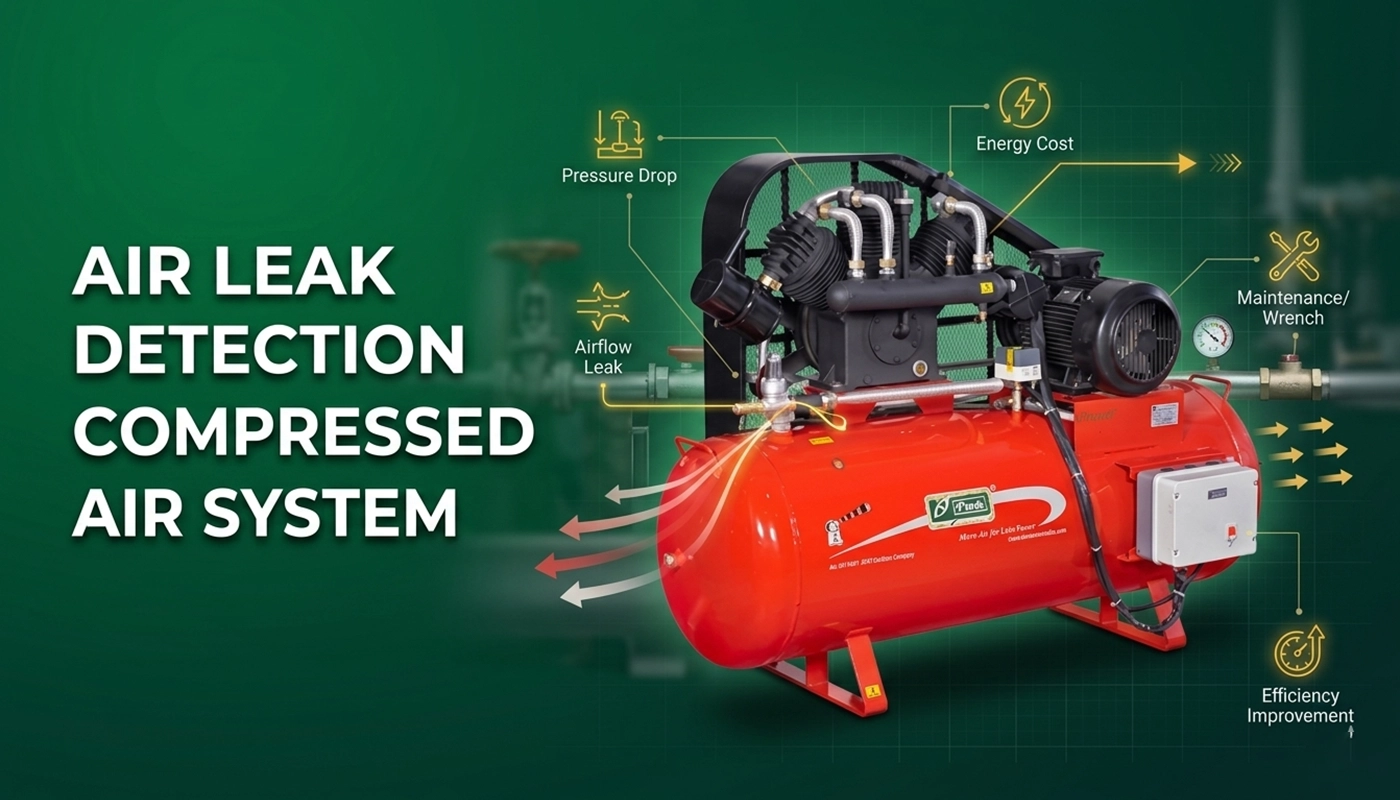
Some studies suggest that companies lose more than 30% of system capacity through leaks, much of it often fixable in a day. That is why you should understand how to detect air leaks in compressed air systems beyond maintenance. Effective compressed air leak detection helps identify hidden losses early, reduce avoidable waste, and keep compressed air systems operating more efficiently.
Where Air Leaks Usually Begin in Compressed Air Systems?
| Common Leak Points | Why They Fail |
|---|---|
| Fittings and couplings | Loosen with vibration |
| Hoses and seals | Wear over time |
| Threaded joints | Develop small escape points |
| Moisture-prone sections | Corrosion can create leakage |
Many leaks do not begin as major faults. They often begin in routine components that receive less attention during inspection.
Common Signs Your Compressed Air System May Have Leaks
Air leaks often show warning signs before the leak point is identified. Watching for these changes can help start compressed air leak detection earlier.
Compressor Runtime Increases
If the compressor runs more often or stays loaded longer than usual, it may be compensating for air loss in the system.
Pressure Becomes Unstable
Unexpected pressure decay during low demand may point to hidden air leaks in compressed air systems.
Pneumatic Tools Lose Performance
Weak or inconsistent tool pressure may point to air escaping before it reaches end-use equipment.
Energy Costs Begin Rising
Higher power consumption without increased output may signal compressed air losses.
Hissing Sounds Near Connections
Leaks around fittings, couplings, valves, or hoses may sometimes be identified through audible air escape.
One warning sign alone may not confirm a leak, but several appearing together often justify a closer inspection.
Leaks People Often Miss During Inspection
Some of the more expensive leaks are often the ones rarely inspected.
Check these areas:
- Quick couplings
- Hose connections
- Valve stems
- Drain traps
- Pressure regulators
- Flexible hoses under repeated movement
- Equipment connection points near production lines
These points are easy to overlook. They often should not be.
What Ignoring Air Leaks Can Cost
Air leaks can cost more than waste compressed air. They can affect operating efficiency in several ways.
Possible impact:
- Higher energy use
- Longer compressor runtime
- Pressure instability
- More maintenance demand
- Reduced equipment efficiency
- Higher downtime risk
Many businesses treat compressed air leak detection as part of controlling operating costs, not just maintenance.
A Step-by-Step Checking Process of Air Leaks
A simple inspection process often makes leak detection easier.
Step 1 - Review pressure stability
Check whether pressure holds normally when demand drops.
Step 2 - Inspect common leak points first
Begin with fittings, valves, hoses, and joints.
Step 3 - Confirm suspected leaks with soap testing
Use soap solution where leakage is suspected.
Step 4 - Use ultrasonic testing for hidden leaks
Use advanced tools where standard checks do not reveal the issue.
Step 5 - Record recurring leak locations
Documenting repeat leak points often reveals broader system conditions.
What Changes When Leaks Are Resolved?
With ongoing leaks:
- Compressor load often increases
- Pressure may fluctuate
- Maintenance issues tend to repeat
When leaks are reduced:
- Pressure usually holds better
- Compressor runtime becomes more stable
- Operations tend to run more reliably
That is often where measurable efficiency gains begin.
How to Reduce Repeat Air Leaks in Compressed Air Systems
Detecting air leaks is as important as preventing them from returning just as much.
Focus on these areas:
Tighten or replace worn fittings
Loose fittings are a common source of repeat leakage.
Replace aging hoses and seals
Worn components often cause recurring air loss.
Maintain correct system pressure
Excess pressure can place unnecessary stress on components.
Improve high-use connection points
Frequently used connections may need stronger fittings or closer inspection.
Track repeat leak locations
Recurring leaks often point to larger system issues.
Quick Leak-Control Checklist
Before small air leaks become expensive losses, check whether you are:
- Reviewing pressure drops regularly
- Inspecting fittings and valves
- Monitoring compressor runtime
- Checking moisture-related wear points
- Recording recurring leak locations
A simple routine often prevents recurring losses from becoming costly ones.
When Professional Compressed Air Leak Detection May Help
Routine checks on equipment can find many visible leaks. Not all losses are visible.
A deeper inspection may help when:
- Pressure loss continues after repairs
- Energy use remains unusually high
- Hidden leaks are suspected
- Systems are large or complex
- Similar leaks keep returning
In those situations, professional compressed air leak detection can often uncover issues routine checks miss.
Frank Compressors Solutions for Detecting & Controlling Air Leaks
Air leaks in compressed air systems often start small, but they quietly increase energy costs, reduce pressure stability, and strain industrial air compressors over time. Regular inspection, early air leak detection, and simple corrective actions prevent unnecessary air loss and improve overall compressed air efficiency.
By understanding common leak points, watching early warning signs, and following a structured compressed air leak detection process, businesses reduce wasted energy and maintain consistent compressed air performance. When leaks persist or systems grow more complex, expert support makes a real difference.
Frank Compressors supports industries with reliable industrial air compressor solutions system expertise, and preventive compressor maintenance guidance. Their approach helps control air leaks, stabilize performance, and protect long term operational reliability.
Recent Blogs
- How to Select a Rotary Screw Air Compressor for Factories?
- Why Permanent Magnet Motor Screw Compressor Saves Energy?
- Air Compressors in EV Battery Manufacturing: What to Know?
- How Do VFD Screw Compressors Save 35% on Energy Bills?
- How to Identify and Fix Air Leaks in Compressed Air Systems?
- How to Remove Moisture from Compressed Air Effectively?
- Choosing the Right Air Compressor Capacity for Your Factory
- How Energy-Efficient Compressors Cut Industrial Power Costs
- Single vs Two-Stage Reciprocating Air Compressor Overview
- Top 10 Air Compressor Manufacturers in Coimbatore
- Air Compressors for Electronics & Semiconductor Industry
- Understanding Oil-Free Scroll Air Compressors & Advantages
- Oil-Free vs Oil-Injected Compressors for Textile Industry
- Tips to Pick The Best High-Pressure Compressor For Business
- Key Things to Check Before Installing a PET Air Compressor
- Benefits of Dual-Stage and Single-Stage Air Compressors
- How to Silence an Air Compressor for a Peaceful Workspace?
- Expert Tips to Select Screw Air Compressor For Packaging
- Benefits of Oil-Free Air Compressors For Food & Beverage Safety
- The Importance of Refrigeration Air Dryers in Pharma Production
- Why Choose a Permanent Magnetic Energy Saving Compressor
- The Importance of Air Compressors in Laser Cutting Machines
- How Dental Air Compressors Benefit the Medical Sector
- Key Applications and Benefits of Piston Vacuum Pumps in Industry
- Understanding The Role of Air Dryers in Compressed Air System
- Why Choose Rotary Screw Air Compressors: Essential Advantages
- Innovative Design Features of Screw Compressors with VFD
- Which One to Choose: Piston Vacuum Pumps vs Rotary Vane Vacuum Pumps?
- A Step By Step Guide For Air Compressor Installation & Setup
- Tips For Improve Your Compressor Life Span
- Different Types Of Compressors And Their Uses In Industries
- High-Pressure Air Compressors: Uses and Advantages for Industrial Solutions
- How Air Compressors Are Transforming The Textile Industry ?
- Tips For Prolonging Your Air Compressor's Lifespan